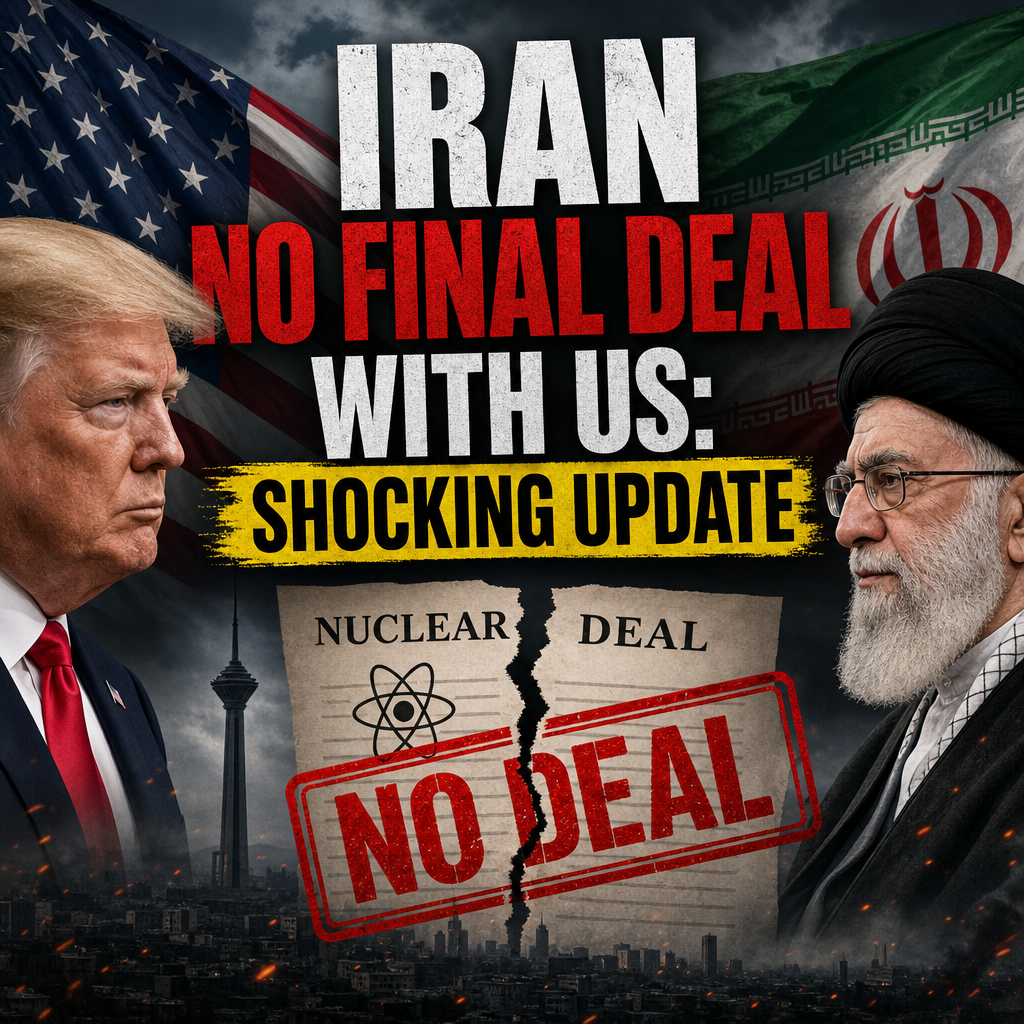
Iran No Final Deal with US: Shocking Update


Iran No Final Deal with US, and that matters because it captures the uneasy reality behind the latest diplomatic headlines: both sides may still want to avoid a bigger crisis, but neither appears ready to make the concessions needed for a breakthrough. Across recent reporting from RT, Al Jazeera, and Sky News, the picture is less about a dramatic collapse in talks than about a familiar pattern of mistrust, delay, and competing red lines.
At its core, the issue is not simply whether Washington and Tehran can talk. They can, and they have. The harder question is whether either side believes a deal would actually solve the problems that have kept relations frozen for years. For the United States, concerns remain centered on Iran’s nuclear program, regional influence, and the broader security implications for allies in the Middle East. For Iran, sanctions relief, sovereignty, and a guarantee that any agreement will not be abandoned by a future US administration remain central priorities. Those tensions explain why even cautious optimism tends to fade quickly.



Iran No Final Deal with US: Why the Talks Keep Stalling
One reason this story keeps resurfacing is that diplomacy in this file rarely moves in a straight line. Reports from different outlets suggest there is still contact, but not enough convergence to produce a final, durable settlement. That is consistent with the broader pattern seen over the past several years: negotiations may produce partial understandings, prisoner exchanges, or temporary de-escalation, but not the kind of binding political reset that would qualify as a true breakthrough.
A key obstacle is trust, or more accurately, the lack of it. Tehran has little reason to assume that any agreement reached now would survive changes in the White House or pressure from Congress. The memory of the US withdrawal from the 2015 nuclear deal remains a powerful reference point in Iranian decision-making. From Washington’s perspective, officials are cautious about offering major sanctions relief without clear, verifiable limits on Iran’s nuclear activity. That leaves both sides stuck in a bargaining loop: Iran wants guarantees first, the US wants compliance first.




The media framing also differs by outlet, which is important for understanding the story responsibly:
– RT tends to emphasize the political deadlock and the limits of US leverage.
– Al Jazeera often focuses on the regional and humanitarian stakes, especially how sanctions and escalation affect ordinary people.
– Sky News usually highlights the strategic risks for Western allies and the broader security implications if talks fail.
Taken together, those perspectives suggest not that one side is clearly “winning,” but that the entire negotiating framework remains fragile.
What Is Actually at Stake Beyond the Headlines
It is easy to treat “no final deal” as a diplomatic headline and move on, but the consequences are more substantial than that. The talks are tied to issues that can shape the wider region:
Nuclear risk and verification
The most immediate concern is Iran’s nuclear program and how much oversight international monitors will have. Even when talks slow down, the underlying question remains the same: can Iran’s program be constrained in a way that reassures outside powers without humiliating Tehran politically?
Sanctions and economic pressure
Sanctions remain one of Washington’s main tools, but they also shape the internal politics of the dispute. Iranian leaders regularly argue that economic pressure has hurt civilians more than decision-makers, while US officials counter that sanctions are intended to force serious negotiation. In reality, the policy has become both a bargaining chip and a symbol of mutual punishment.
Regional spillover
There is also the issue of spillover. Tensions involving proxy groups, maritime security, and strikes across the region can derail diplomacy even when the direct US-Iran channel is still alive. That is why many analysts treat the talks as part of a wider security puzzle rather than a narrow bilateral issue.
A Cautious Reading of the Latest Update
The fairest interpretation of the latest reporting is that neither side appears ready to pay the political price of a grand compromise. That does not mean war is inevitable, or that diplomacy has failed completely. It means the current phase is probably best understood as managed instability.
That may sound unsatisfying, but it is a realistic description of how this relationship has functioned for years. Both governments have incentives to avoid an uncontrolled crisis. Both also have domestic audiences and strategic goals that make compromise difficult. So the likely outcome, at least for now, is continued negotiation without closure.
There is a subtle but important difference between “no final deal” and “no diplomacy.” The first suggests a stalled process; the second would imply total breakdown. The available reporting points more toward the former. That matters because stalled diplomacy can still reduce risk if it preserves communication channels and keeps pressure below the threshold of conflict.
At the same time, the absence of a final agreement leaves the situation vulnerable to miscalculation. A single incident, a regional attack, or a political shift in either country could quickly undo whatever limited progress has been made.
For now, the evidence supports a measured conclusion: Iran and the US are still trapped in a negotiation that is real, consequential, and unresolved. The update is not shocking because it reveals something entirely new; it is shocking because it reminds everyone how long this impasse has endured, and how little room appears to remain for a clean solution.